
A heavy‑duty electric wire rope hoist is a mechanical device powered by an electric motor, designed to lift, lower, and move heavy loads using a steel wire rope wound onto a drum. Such hoists are used in industrial settings (factories, shipyards, power plants, warehouses, construction sites) where loads are large in weight and/or the height of lift is considerable When designing, choosing, or specifying a heavy duty wire rope hoist, several performance and design parameters are crucial. Safe Working Load (SWL) The maximum load the hoist is rated to lift safely. Heavy duty hoists may offer SWLs like 1 T, 2 T, 5 T, 10 T, up to 50 T or more. anker.in +2 mgtechindia.com +2 Height of Lift The vertical distance that the hoist must be able to raise/lower the load. For tall ceilings, large racks, chimneys, etc., this can be very high (tens of meters). The available rope length and drum design need to accommodate this. anker.in +2 krishnaengineeringindia.com +2 Speed of Hoisting / Lowering How fast the hoist can lift or lower a load. Trade‑offs: faster speed helps productivity, but may increase stress and safety risk; smoother, slower speeds are safer and more precise. Multi‑speed motors or variable frequency drives (VFDs) may help. mgtechindia.com +2 LOADMATE +2 Duty Cycle / Class of Duty How frequently the hoist is used: how many starts/stops per hour, how long continuous operation, etc. Standards (such as IS, ISO, FEM) define duty classes: light, medium, heavy, very heavy. A heavy duty hoist must have components (especially motor, gearbox, brakes) suitable for high duty. anker.in +2 liftingmachines.in +2 Factor of Safety / Overload Capacity Hoists are designed with safety margins beyond rated loads; overload tests are often done (e.g. 25% overload test) to ensure safety under occasional over‑load. anker.in Environmental Conditions Ambient temperature, humidity, dust, corrosive atmosphere, etc., affect material choice, seals, paint or coatings, motor insulation,


This is your website preview.
Currently it only shows your basic business info. Start adding relevant business details such as description, images and products or services to gain your customers attention by using Boost 360 android app / iOS App / web portal.
Heavy Duty Electric Wire Rope Hoist
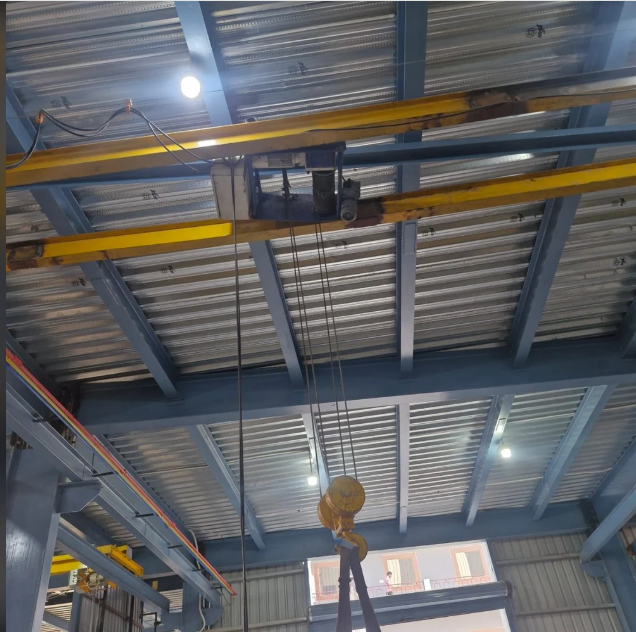
2025-10-14T06:31:04
A heavy‑duty electric wire rope hoist is a mechanical device powered by an electric motor, designed to lift, lower, and move heavy loads using a steel wire rope wound onto a drum. Such hoists are used in industrial settings (factories, shipyards, power plants, warehouses, construction sites) where loads are large in weight and/or the height of lift is considerable When designing, choosing, or specifying a heavy duty wire rope hoist, several performance and design parameters are crucial. Safe Working Load (SWL) The maximum load the hoist is rated to lift safely. Heavy duty hoists may offer SWLs like 1 T, 2 T, 5 T, 10 T, up to 50 T or more. anker.in +2 mgtechindia.com +2 Height of Lift The vertical distance that the hoist must be able to raise/lower the load. For tall ceilings, large racks, chimneys, etc., this can be very high (tens of meters). The available rope length and drum design need to accommodate this. anker.in +2 krishnaengineeringindia.com +2 Speed of Hoisting / Lowering How fast the hoist can lift or lower a load. Trade‑offs: faster speed helps productivity, but may increase stress and safety risk; smoother, slower speeds are safer and more precise. Multi‑speed motors or variable frequency drives (VFDs) may help. mgtechindia.com +2 LOADMATE +2 Duty Cycle / Class of Duty How frequently the hoist is used: how many starts/stops per hour, how long continuous operation, etc. Standards (such as IS, ISO, FEM) define duty classes: light, medium, heavy, very heavy. A heavy duty hoist must have components (especially motor, gearbox, brakes) suitable for high duty. anker.in +2 liftingmachines.in +2 Factor of Safety / Overload Capacity Hoists are designed with safety margins beyond rated loads; overload tests are often done (e.g. 25% overload test) to ensure safety under occasional over‑load. anker.in Environmental Conditions Ambient temperature, humidity, dust, corrosive atmosphere, etc., affect material choice, seals, paint or coatings, motor insulation,
2025-10-14T06:31:04


Submit Your Enquiry